







 Mike Alexander October 19, 2026
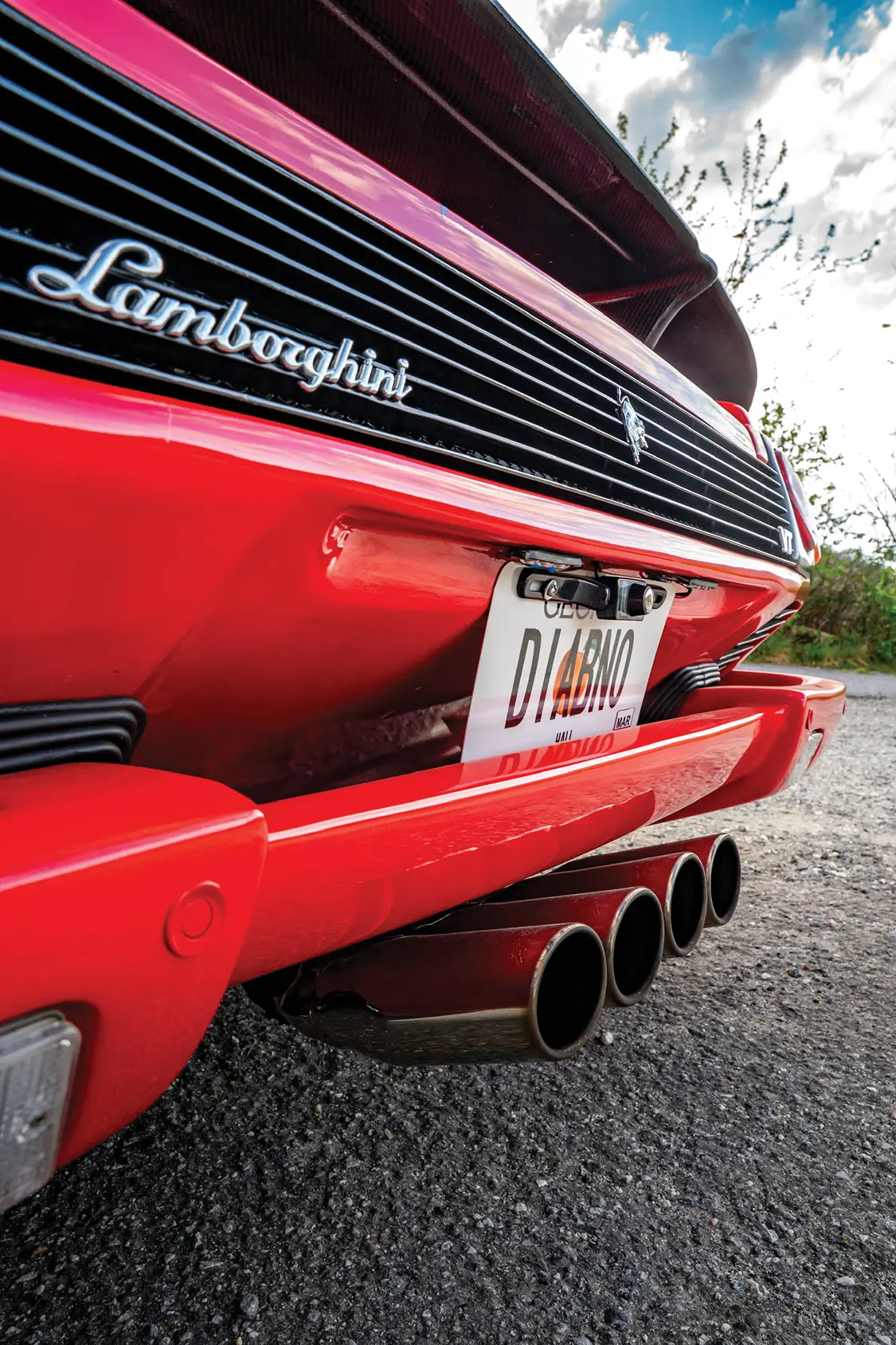
THERE’S a certain kind of audacity required to take on a Lamborghini Diablo. Not to restore one, not to replicate one, but to reinterpret it entirely through a different culture, a different chassis, and a different set of priorities. What sits low and impossibly wide on polished billets is not just a replica; it’s a collision of worlds. And fittingly, it goes by a name that doesn’t take itself too seriously: “Diabno”.
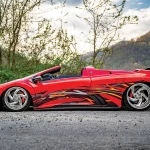
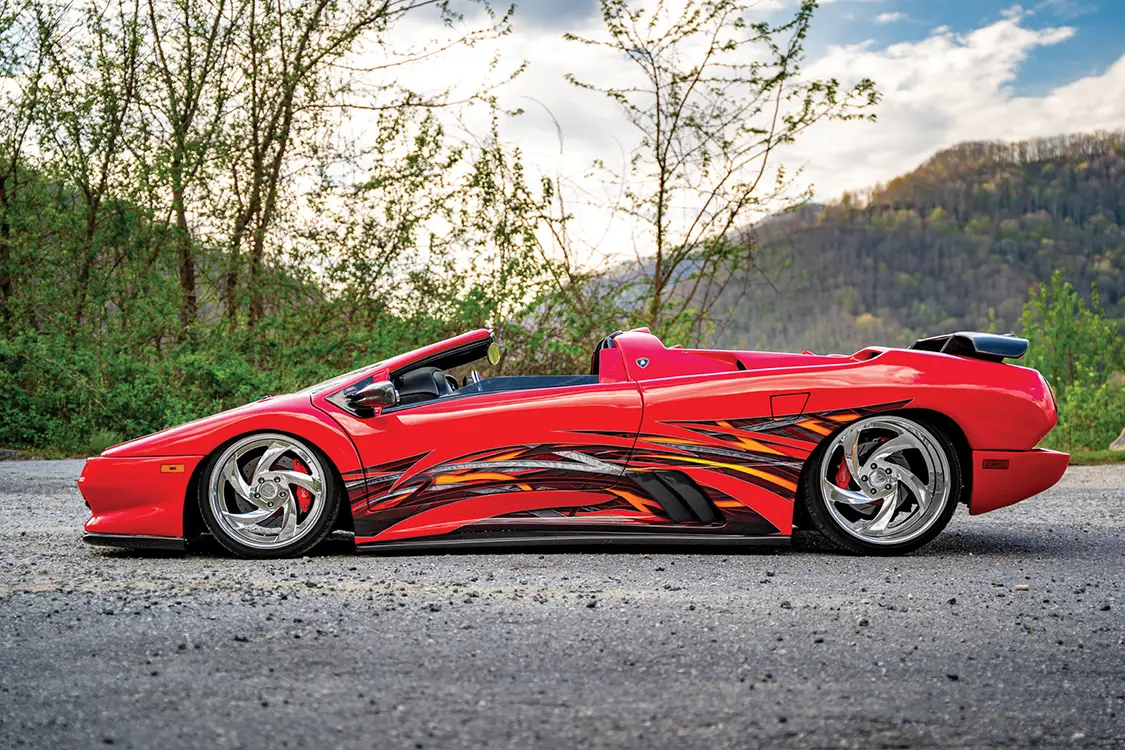
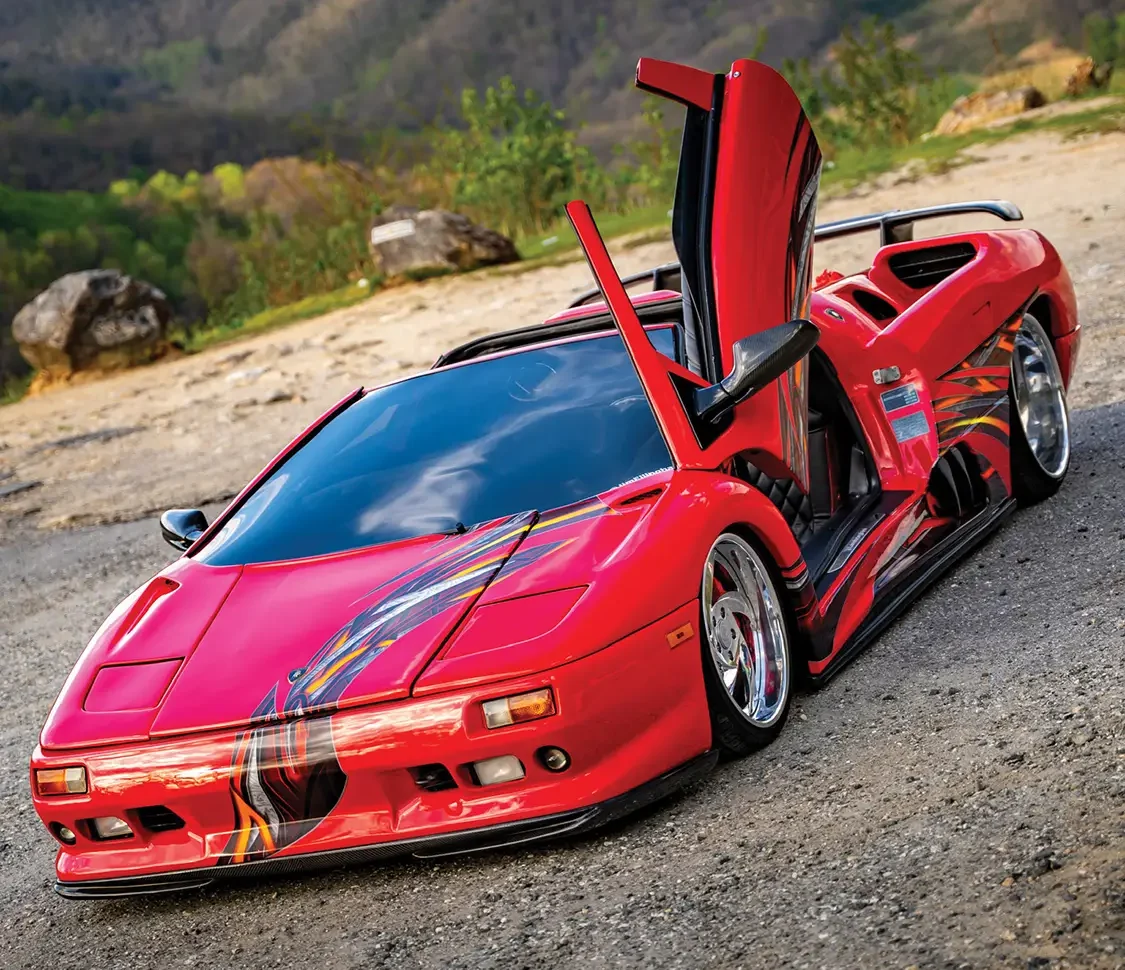
At first glance, the silhouette is unmistakable. The wedge profile, the dramatic intakes, the roadster proportions—all faithful to Sant’Agata’s original vision. But beneath the Lamborghini Rosso Red paint lies something far more unconventional: a 1992 Toyota MR2 chassis, stretched meticulously to match the Diablo’s 104.3-inch wheelbase. That detail alone sets the tone for the entire build. This wasn’t about approximation—it was about precision, even when starting from a completely different foundation.
Unlike the sea of Fiero-based kits that have defined the replica space for decades, this car began with better bones and still required a full transformation. When it was picked up in June 2025 as a Marketplace project, it was technically running and driving, but only just. The fitment was off, the stance was wrong, the interior was deteriorating, and the overall execution fell well short of the vision. In hindsight, it was rough, but at the time, it was an opportunity.
The turning point came early—and decisively. A Sawzall to the exhaust system to make room for the air setup wasn’t just a modification; it was a commitment. Once that first cut was made, there was no reverting. From that moment forward, the car was no longer a project. It was a full build.
The direction? A deliberate fusion of exotic supercar presence with unmistakable mini-truckin’ DNA.
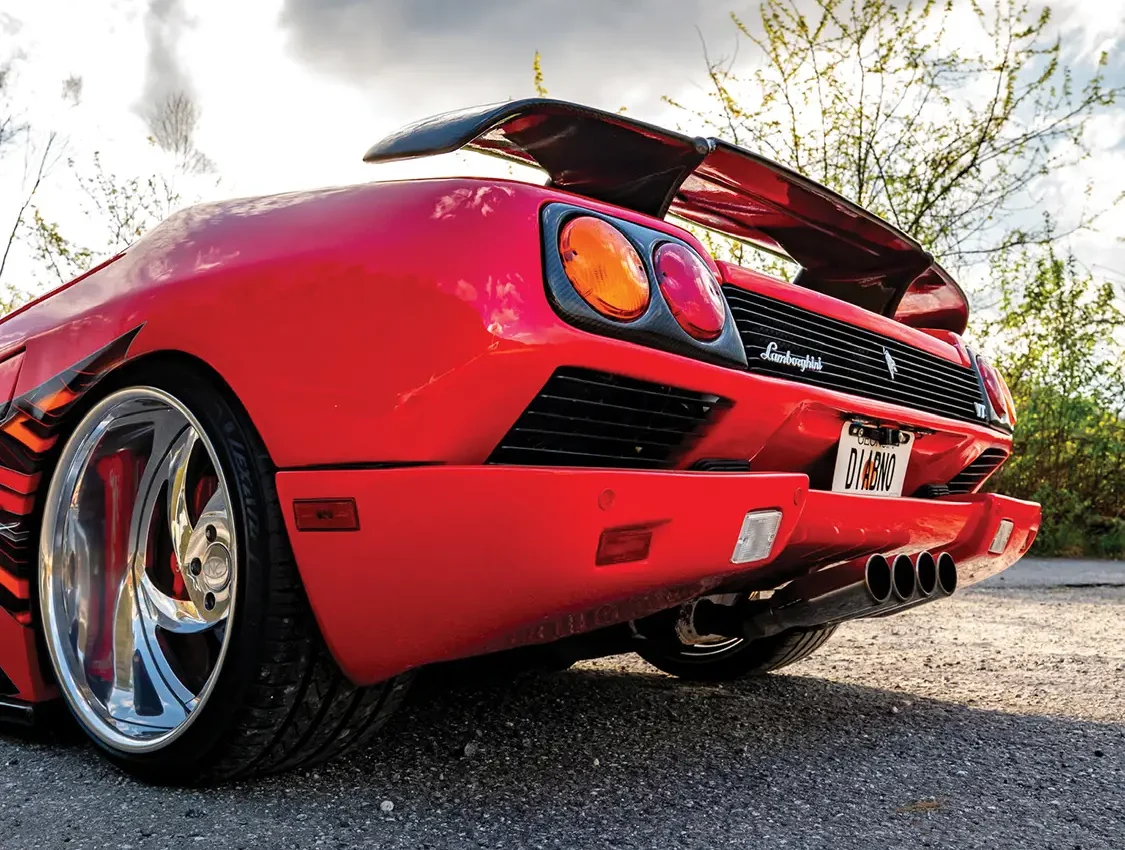
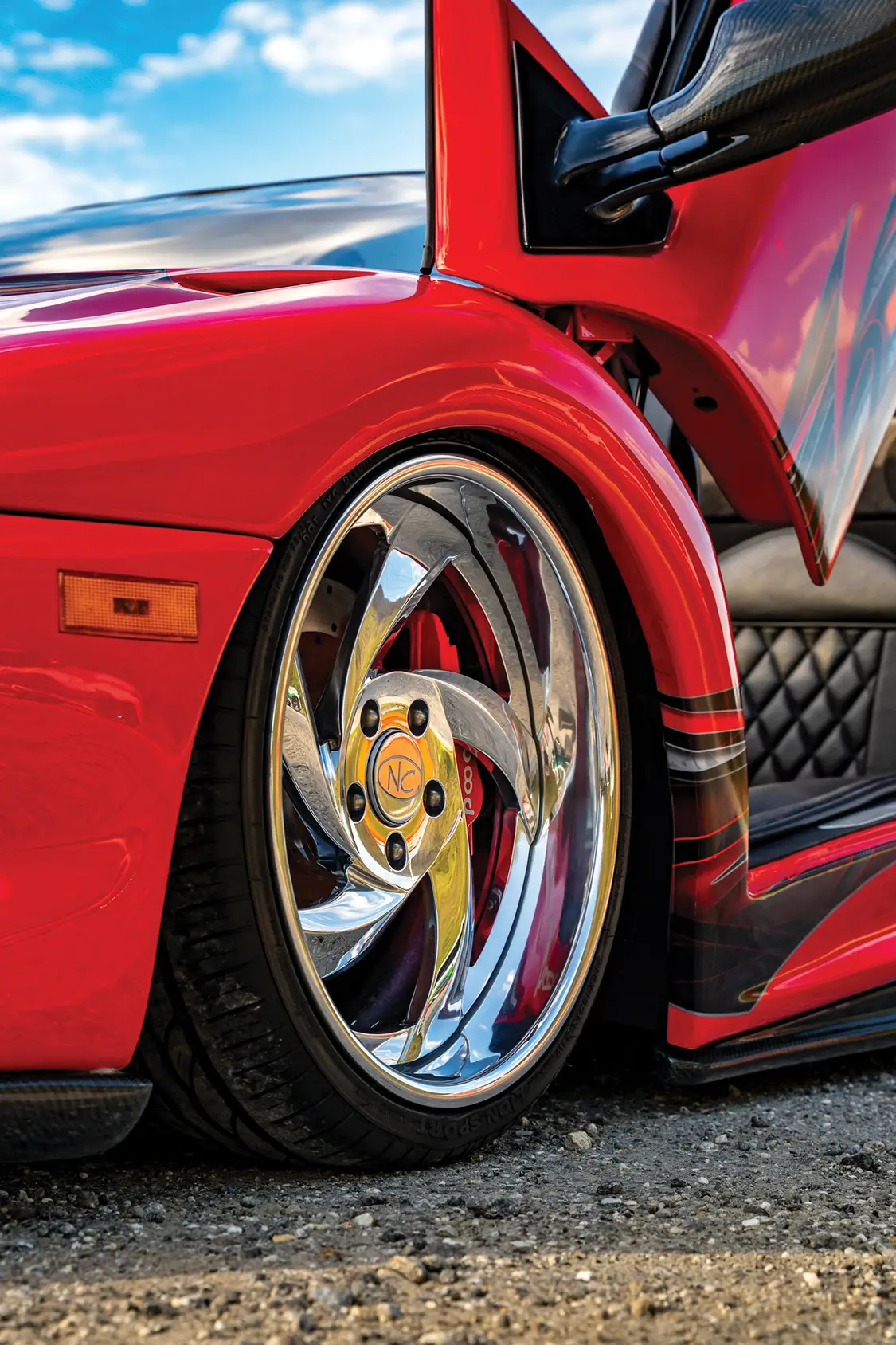
That influence is most obvious in the stance. Air struts paired with an Air Lift ALP4 management system allow the car to sit impossibly low when aired out, tucking a set of one-off billet wheels that define the entire visual identity. Measuring 18×9 up front and an aggressive 20×15 in the rear, the wheels don’t just fill the arches—they dominate them. Combined with a Wilwood big brake kit, the setup balances show-quality aesthetics with legitimate stopping power.
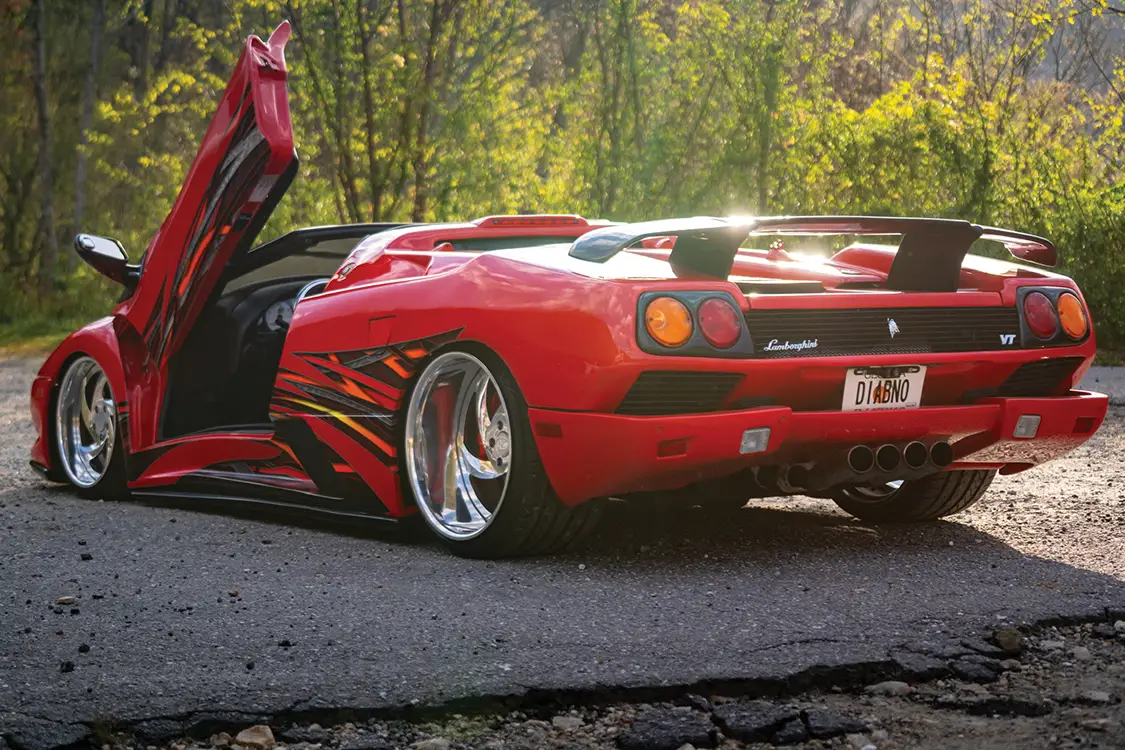
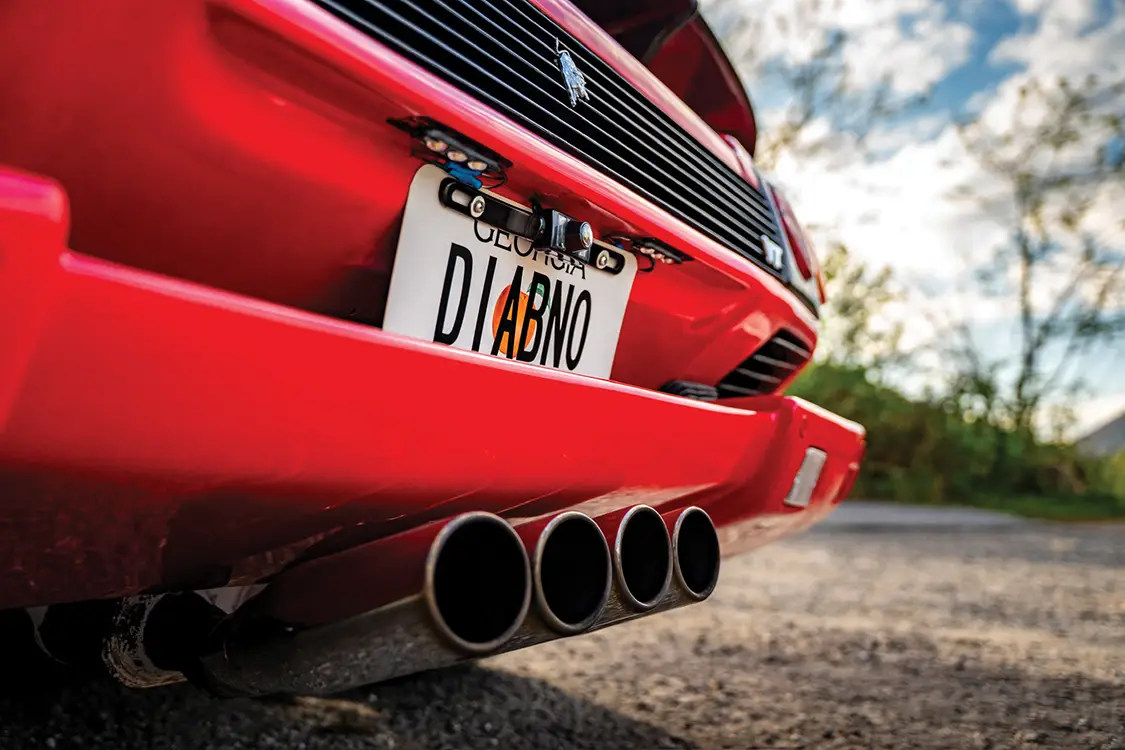
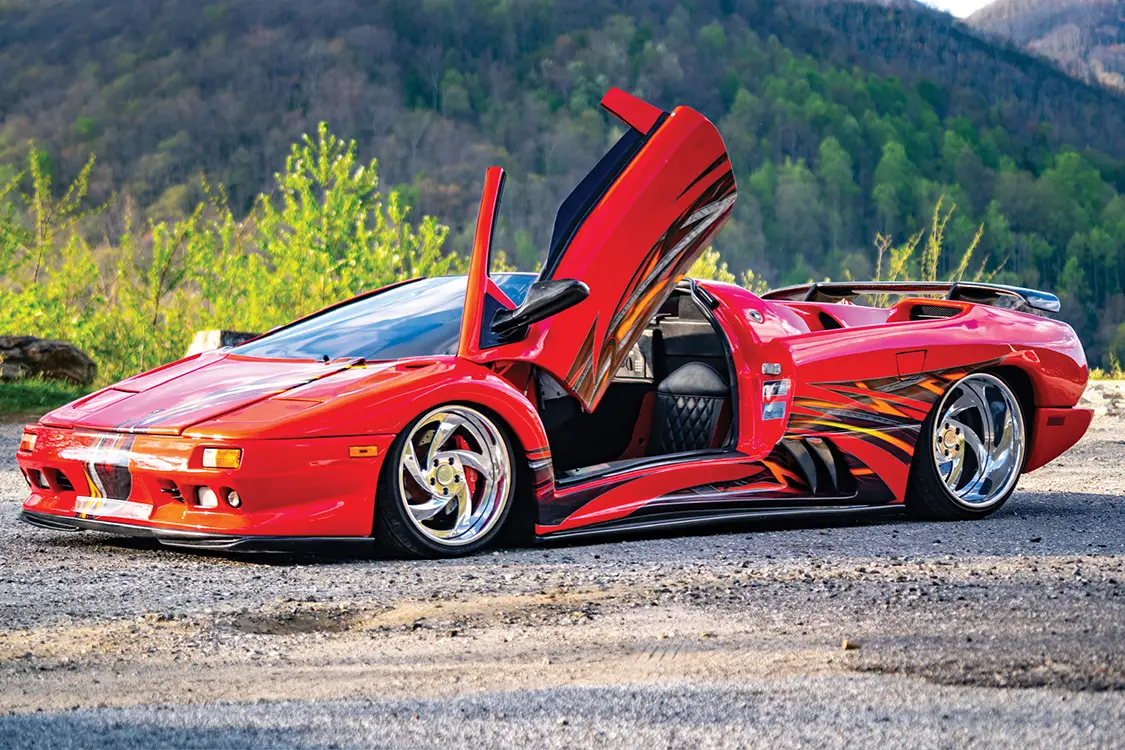
The exterior is layered with authentic Lamborghini carbon fiber components—a lip kit, a wing, and taillight surrounds—bringing real materials into a reinterpretation that could have easily leaned purely cosmetic. Over that, the custom graphic treatment ties everything back to its roots. Executed in a classic mini-truck style by Supreme Signs, the flowing lines and sharp accents break up the red with movement and attitude, reinforcing that this vehicle isn’t a traditional exotic build—it’s something else entirely.
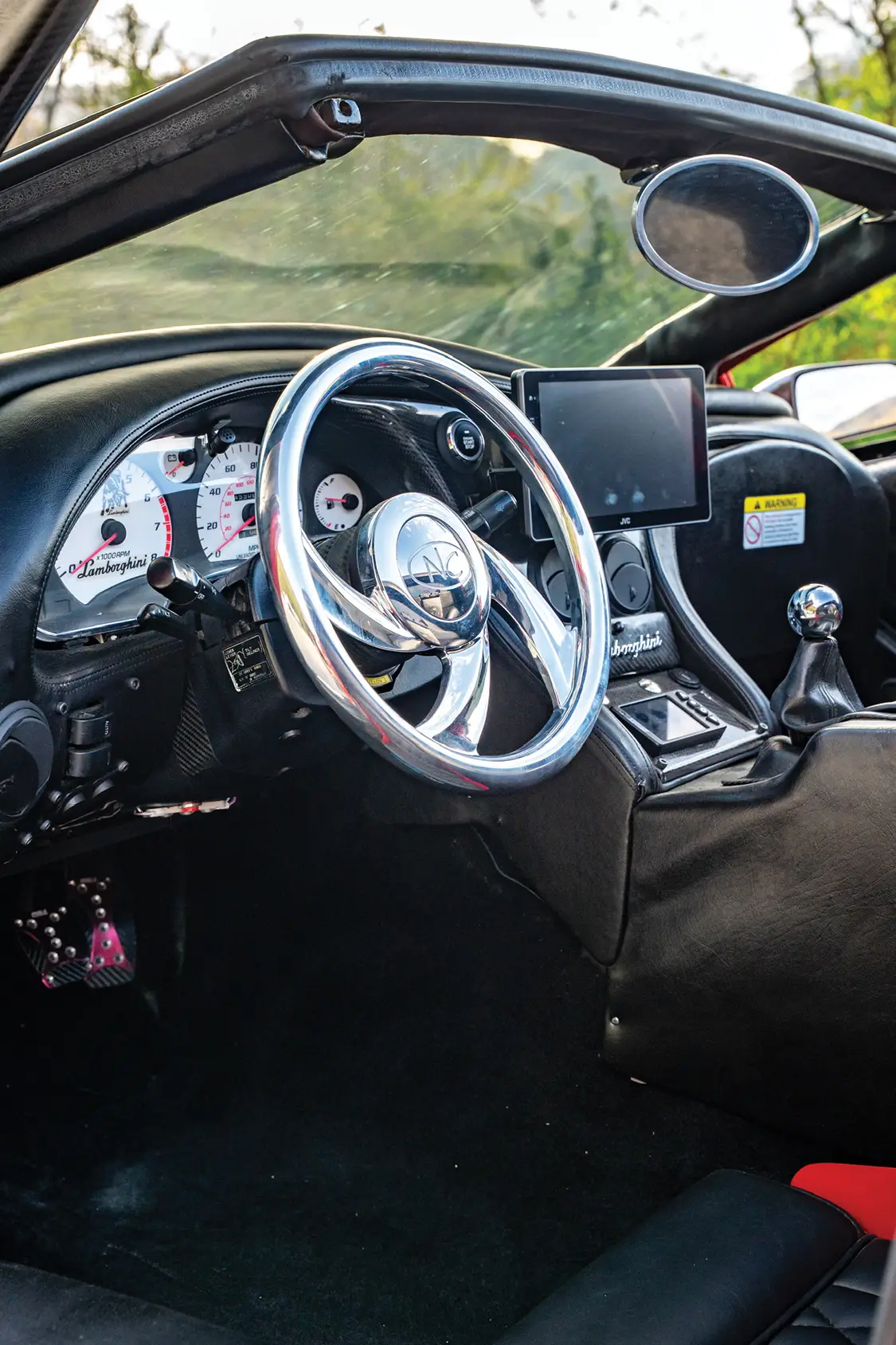
Inside, the transformation continues with equal intent. A full Lamborghini-style interior—dash, door panels, and layout—creates the expected visual language, but the details push it further. Custom red powdercoated seat frames support diamond-stitched leather, matched by a suede headliner that carries the same pattern overhead. A billet steering wheel anchors the driver’s position, while a carefully integrated audio system—10-inch subwoofer, component door sets, and rear fill—ensures the experience isn’t just visual.
Even the lighting has been addressed, with full LED integration modernizing the car beyond its mid-90s inspiration.
Mechanically, the MR2 platform remains lively. With a header, full exhaust, and intake upgrades, the car retains a responsive, engaging character. It’s not trying to be a V12 Diablo—and that’s precisely the point. It’s something more approachable, more usable, and, in many ways, more fun. On the road, it delivers enough performance to surprise, especially in the corners. One mountain run was enough to serve as a reality check. This car may look like a Lamborghini, but it’s still something you can push a little harder than you probably should.
Of course, builds at this level don’t come without setbacks. The most painful moment came during the front air suspension install. Accessing the top of the struts required removing the windshield—a genuine Diablo piece. It shattered in the process. With replacements virtually nonexistent, a custom solution had to be commissioned, adding four months and a significant hit to the budget. It’s the kind of problem you don’t anticipate, but one that defines the difference between a casual project and a serious build.
With four months of work and nearly $100,000 invested, the result is a car that doesn’t just turn heads—it sparks reactions—some positive, some skeptical, all immediate. People notice the width. The stance. The presence. And then they start asking questions.
Recognition has already followed, with a Rad Ride award at MiniTruckin’ Nationals 2026, cementing its place not just as a curiosity but also as a standout in a competitive field. And yet, it’s not quite finished. Future plans include forced induction or potentially a full engine swap—because builds like this are rarely static. They evolve.
Ultimately, Diabno isn’t trying to convince anyone it’s a Lamborghini. It doesn’t need to. What it offers instead is something arguably more intriguing: a high-end reinterpretation that respects the original, while unapologetically injecting a completely different culture into it.
Diabno is bold. It’s polarizing. And it’s exactly what happens when you stop building to fit expectations and start building for yourself.
Photos by Ryan Rutledge