







 Drive May 31, 2026
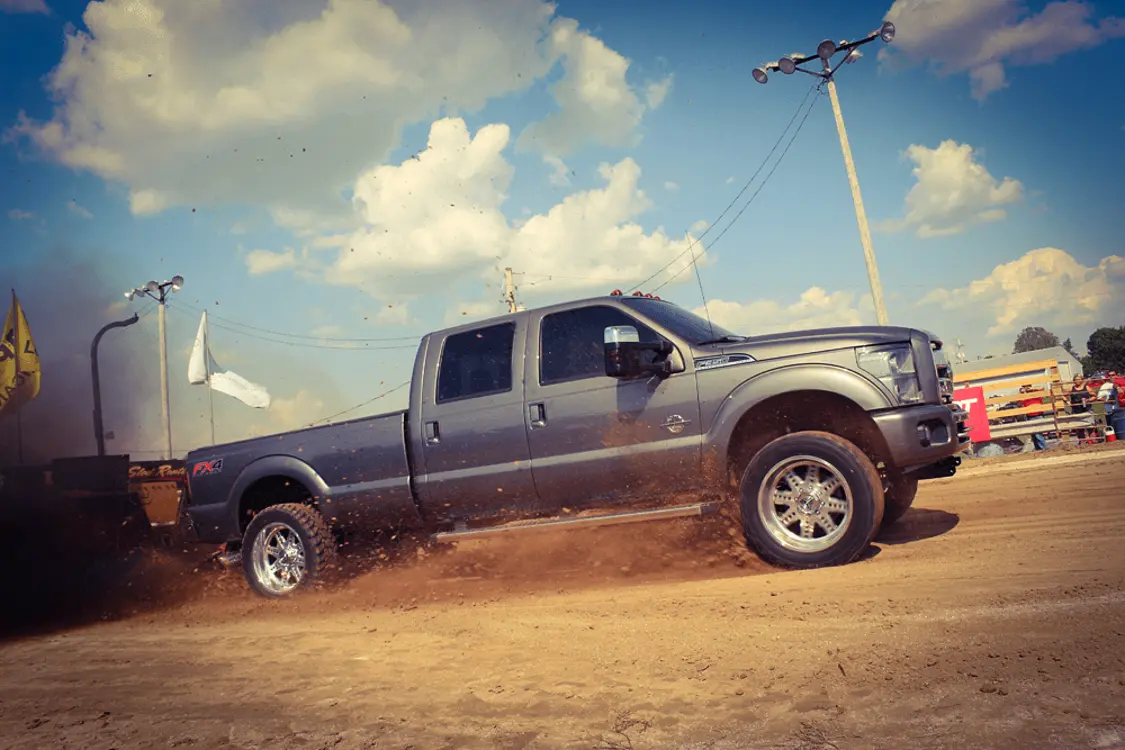
If your F-250 or F-350 is doing real work, you already know the feeling. Stock tune, clogged DPF, sluggish throttle response at 65 mph with 18,000 pounds behind you. The factory emissions system wasn’t designed with your use case in mind. It was designed to pass a test.
Guys who tow heavy and tow often eventually reach the same conclusion: if you want a truck that actually performs under load, you have to build it that way. And for the 2011–2019 Ford F-250 and F-350 running the 6.7L Powerstroke, there’s a clear, well-proven upgrade path that transforms the truck from a compliant daily driver into a legitimate work machine.
Here’s how to do it right and what to buy first.
The single biggest restriction on a stock 6.7 Powerstroke isn’t the turbo, isn’t the fuel system, and isn’t the injectors. It’s the Diesel Particulate Filter. The DPF is a wall-flow filter that traps soot, regenerates under high heat, and gradually chokes exhaust flow as it ages. For a truck that tows hard in stop-and-go conditions the DPF never fully clears itself, and you end up fighting your own exhaust backpressure every time you get on the throttle.
A DPF delete pipe replaces that restriction with straight pipe and the difference in exhaust flow is immediate. Throttle response sharpens, EGT drops under load, and the engine stops fighting itself.
For the 2011–2022 F-250 and F-350, a quality 6.7 Powerstroke DPF delete kit will include a downpipe-back section designed to replace the factory DPF and CAT without any custom fab work. Choose a 5″ pipe if you’re building for max flow; 4″ works well for trucks that split time between towing and daily driving.
The Exhaust Gas Recirculation system on the 6.7 Powerstroke does exactly what the name says: it recirculates a portion of exhaust gas back into the intake to reduce combustion temperatures and lower NOx emissions. The side effect? That exhaust gas carries oil vapor and soot, and over time it coats the intake manifold, intercooler pipes, and EGR cooler in a thick carbon buildup that progressively robs airflow.
On a high-mileage tow rig, a clogged EGR system is often mistaken for a turbo problem, a boost leak, or even injector wear. In many cases, it’s just carbon restriction, and the fix is either a very messy cleaning job or a proper delete.
A dedicated 6.7 Powerstroke EGR delete kit replaces the EGR valve and cooler with block-off plates and a coolant reroute, sealing the system permanently. The engine breathes cleaner air, intake temperatures come down, and you stop buying EGR coolers every 80,000 miles.
EngineGo EGR kits for the 6.7 Powerstroke are spec’d for both the 2011–2014 and 2017–2025 model years. These are two distinct configurations that share similar pain points but require different hardware. Make sure you’re matching parts to your exact build year.
If you’re already planning to pull the DPF and delete the EGR, the math on a bundled kit starts making a lot of sense. Sourcing individual components like a delete pipe, EGR plates, DEF delete, and a tuner from three different suppliers means three different fitment assumptions, three shipping timelines, and no guarantee the components were designed to work together.
A complete 6.7 Powerstroke delete kit bundles the core hardware into a single package: exhaust pipe, EGR block-off, and in most configurations, the DEF system delete as well. It’s the cleanest way to approach a full build, and it removes most of the guesswork about component compatibility.
EngineGo’s Powerstroke full delete kits cover the 2011–2025 model year range across multiple exhaust diameter and configuration options. If you’re planning to do this build right, starting with a complete kit is the move.
Here’s where guys sometimes get burned: they pull the DPF, block the EGR, and then drive the truck without a supporting tune. The ECU is still looking for feedback from the DPF pressure sensors, the EGR position sensor, and the DEF dosing system. Without a tune, you’ll have a dashboard full of fault codes, a truck that may go into reduced power mode, and no actual performance gain despite all the hardware work.
A diesel tuner unlocks the full benefit of the exhaust and EGR work. It recalibrates fueling, boost targets, and timing to take advantage of the improved airflow. For the 6.7 Powerstroke, the Mini Maxx V2 and H&S Mini Maxx are the most commonly paired tuners with delete builds since they’re truck-specific, flash-and-drive simple, and widely supported in the community.
If you’re sourcing a complete package, look for a 6.7 Powerstroke delete kit that includes a tuner as part of the bundle. EngineGo offers configurations that pair the Mini Maxx V2 with the full delete hardware, which is the most efficient way to spec the build and ensure everything is tested together.
One upgrade that often gets overlooked in the excitement of a delete build is the CCV (Crankcase Ventilation) reroute. From the factory, the 6.7 Powerstroke routes crankcase blow-by gases back into the intake tract, which sounds reasonable until you realize those gases carry oil mist that coats the intercooler, intake pipes, and throttle body over time.
A 6.7 Powerstroke CCV reroute kit redirects those gases away from the intake and vents them externally. It’s a straightforward install, the parts are inexpensive relative to everything else in the build, and it keeps the intake side of your engine significantly cleaner over the long haul. For a truck that’s going to see another 150,000 miles of towing, this is one of those small investments that pays off over time.
For a 2011–2019 F-250 or F-350 6.7 Powerstroke that sees regular towing duty, the full upgrade sequence looks like this:
Stage 1: Exhaust: 4″ or 5″ DPF delete pipe, downpipe-back configuration. Gets exhaust heat out fast, reduces backpressure, and improves throttle response immediately.
Stage 2: EGR delete: Block-off plates, coolant reroute, no more carbon buildup in the intake. Cleaner air in, better combustion, longer engine life between service intervals.
Stage 3: Tune: Diesel tuner matched to your delete hardware. This is what ties the exhaust and EGR work together and delivers real, measurable horsepower and torque gains.
Stage 4: CCV reroute: Low-cost, high-value intake protection. Do it while everything else is apart.
The easiest way to execute this is with a complete delete kit that covers stages 1 through 3 in a single purchase. Browse the full selection of 6.7 Powerstroke delete kits at EngineGo to find the right configuration for your model year and exhaust preference.
There’s a reason the 6.7 Powerstroke has earned a reputation as one of the better modern diesel platforms — the engine itself is fundamentally sound. What holds it back from being a great tow rig at high mileage isn’t the engine design. It’s the emissions hardware layered on top of it.
Remove the restriction. Tune the calibration. Breathe some life back into the engine. That’s the build, and it’s well within reach for any F-250 or F-350 owner who’s ready to stop fighting the factory setup and start actually enjoying the truck.
Browse the complete lineup of Powerstroke delete kits, EGR kits, and CCV reroute hardware at EngineGo, featuring free shipping on all orders.